Gokyo Lakes Trek In March
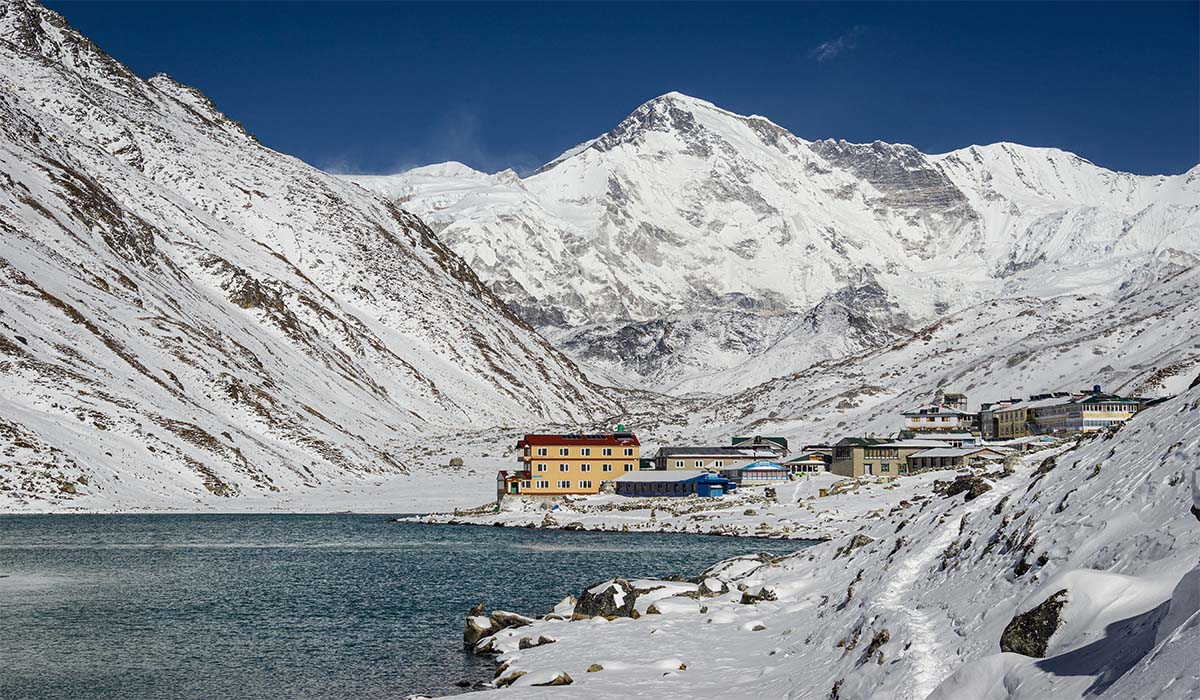
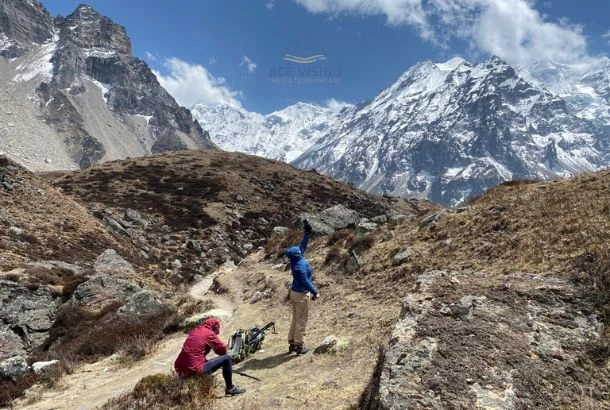
Marking the arrival of spring, the first week to 10 days are often still chilly, as some winter cold remains in the atmosphere. At upper elevations (above 4,000 meters), expect lingering snow, which makes some parts of the trail icy and slippery. Daytime temperature is cool, while nights stay cold. The average temperature of the day is about 5°C to 15°C, and during the night it drops to about -10°C. Despite falling in the peak trekking season, it experiences fewer crowds than April and May. So, trekkers can enjoy peaceful trails with excellent himalayan views.
Similarly, in the lower valleys, flowers begin to bloom, adding radiance to the Gokyo Lake route. Moreover, it offers clear visibility with no haze in sight and presents unobscured panoramic views.
Pros
- Stable weather conditions and comfortable trekking temperatures.
- Lesser traffic allows a quiet and immersive experience.
- Blooming rhododendron forests.
- Clearest sights of the surrounding himalayas.
- At the beginning of the month, visitors can enjoy a frozen aesthetic, as most lakes are solid and glaciers are covered in a layer of snow.
- More personalized teahouse experience, as they are not completely packed.
Cons
- Days are warm, but the nights are still cold, so sleeping in the unheated teahouses can be difficult.
- In early March, Cho La pass and Renjo La pass could be closed.
- Compared to the other two months of spring, March has shorter daylight hours.
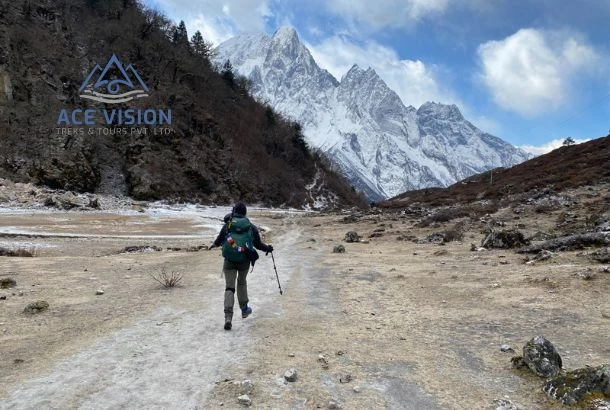
- The icy trails are prone to slipping and trapping, causing injuries.
Gokyo Lakes Trek In April
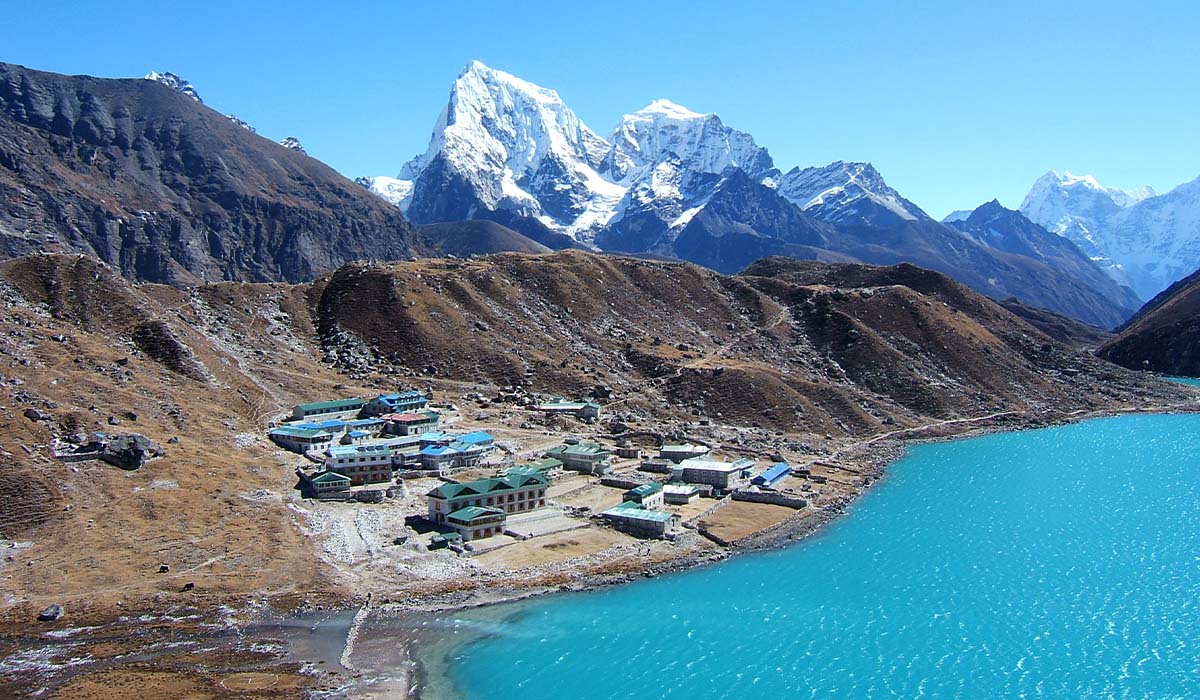
Among the Spring months, April is the most desirable time for the trek. It brings a predictable weather pattern, warm temperatures, and the clearest views. By this time, snow has melted from most of the trails, revealing the dry and safe routes. Therefore, April has the least chance of natural hazards and accidents.
Lower regions offer pleasantly warm temperatures, and the upper regions are cool but manageable for trekking. Daytime temperature ranges from 10°C to 20°C, and the nighttime falls to -5°C to -10°C. Similarly, April is a perfect time for wildlife and himalayan birds sightings. The major highlight of the Gokyo Lakes trek in April is the blooming rhododendron and alpine flowers. This creates colorful vistas against the stunning backdrop of the pearly white mountains.
Pros
- The safest time to cross the high-altitude pass of the Gokyo trek.
- Warm environment increases the wildlife movement, creating a window for trekkers to sight them.
- Crystal clear views of the mountains, lakes, and glaciers from Gokyo Ri.
- Blooming flora covering the trekking routes.
- Opportunity to meet trekking enthusiasts from around the world, as April attracts one of the highest numbers of visitors.
Cons
- Higher traffic on the Gokyo Lake route. So, not ideal for trekkers who like their solitude.
- With hot weather, there is a possibility of slight haze.
- Teahouses are often occupied to their capacity, so trekkers may have to book accommodation in advance.
Gokyo Lakes Trek In May
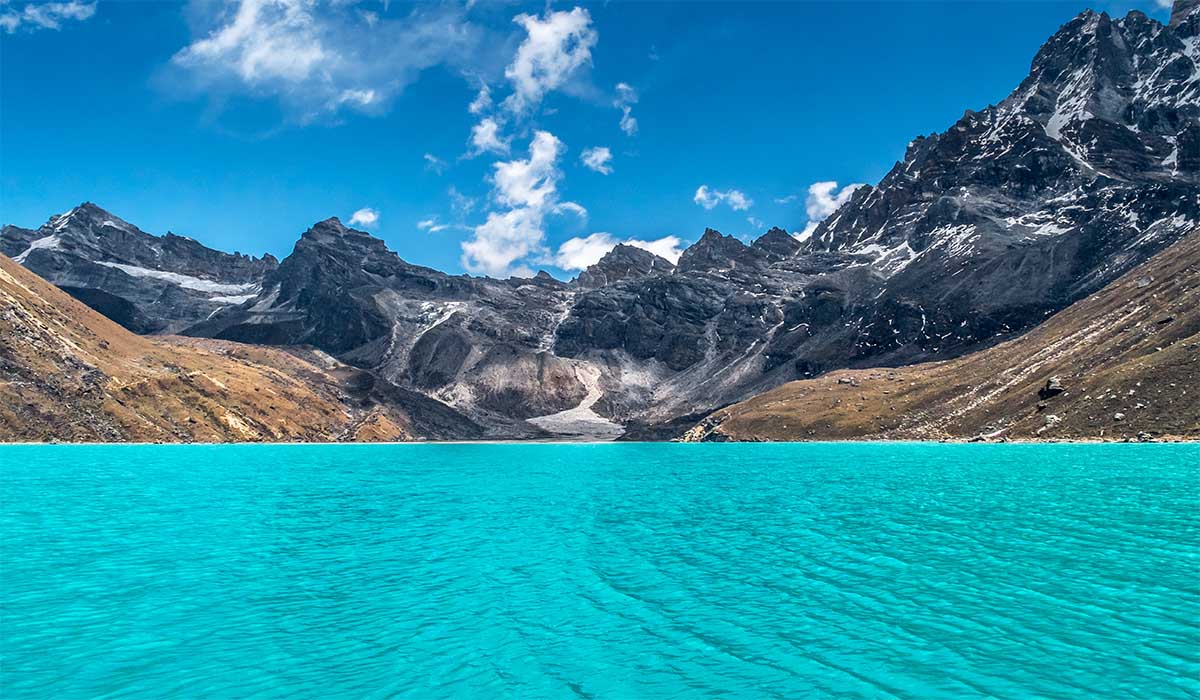
It is the warmest month of spring with perfect trekking temperatures. If you want to experience lush green landscapes and stunning turquoise water bodies, then May is perfect for you. Likewise, compared to the other two months, it has longer daylight hours. Wildflowers and rhododendron are still in full glory in the lower regions.
The Gokyo trek route is sturdy and clear, allowing trekkers to walk safely. Similar to April, you can also spot wild animals and birds. However, around the month’s end, expect occasional dark clouds and pre-monsoon rain. While it is not as heavy as in the monsoon season and poses no major harm, visibility reduces slightly, and trails get muddy for a brief time.
Pros
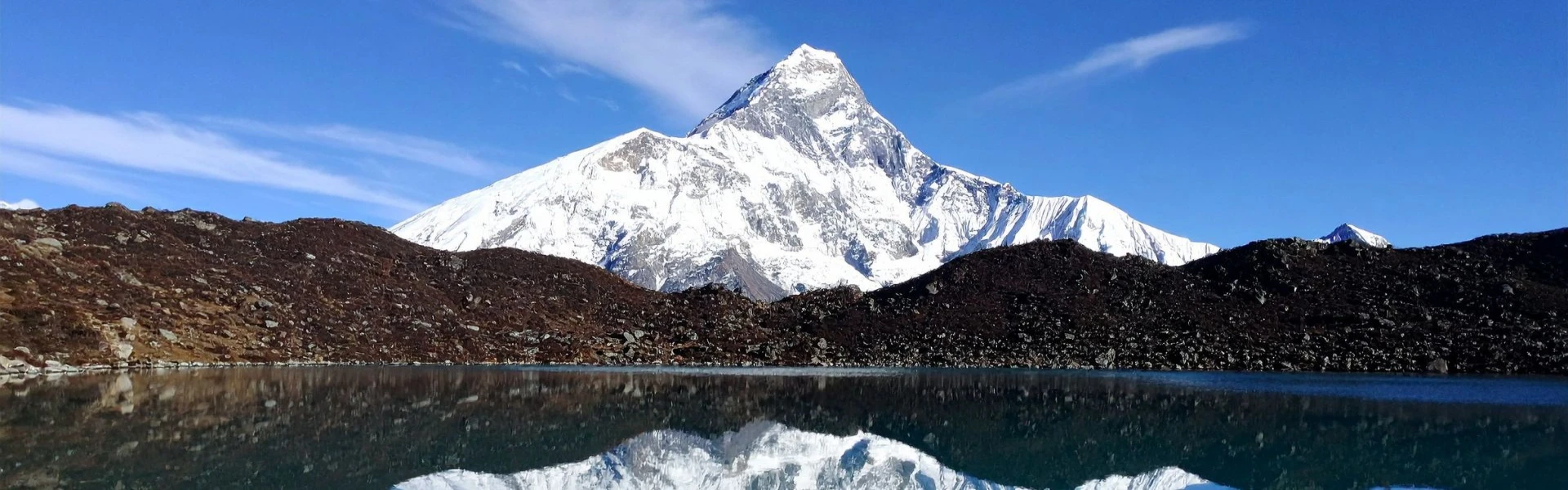
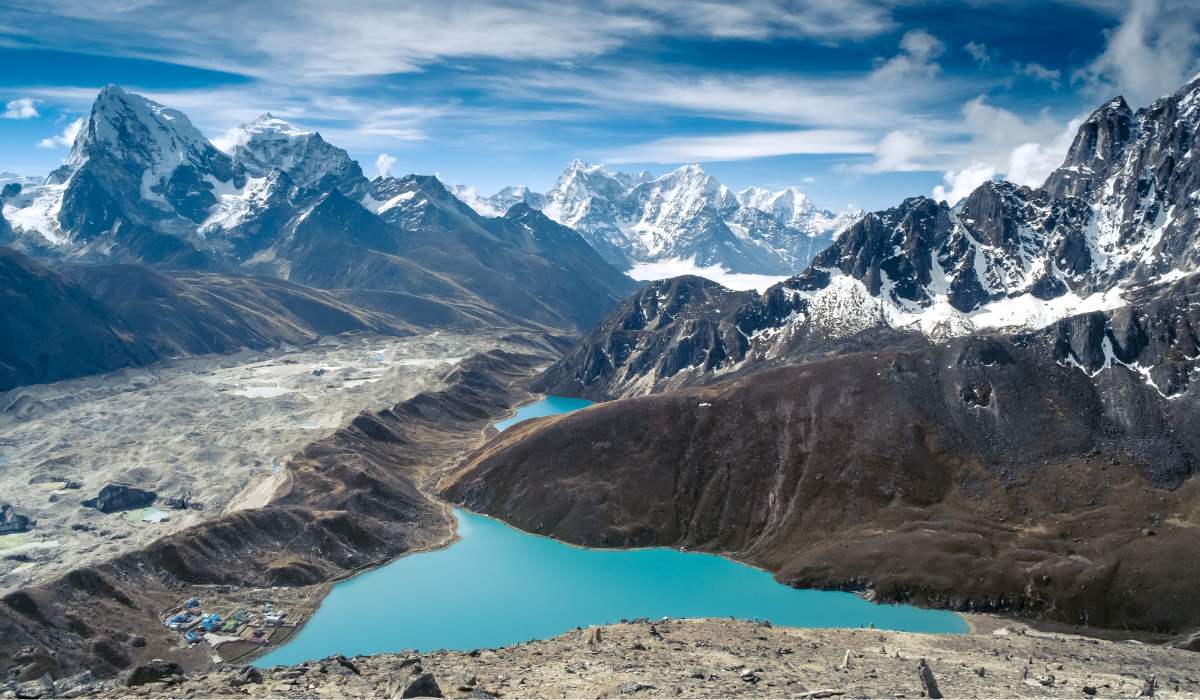
- The milky turquoise Gokyo lakes are in their full glory as the snow is completely melted away by this time.
- Alpine grasses and forests are in the greenest shades.
- Raw view of the Ngozumpa glacier with no snow coverage.
- Comfortable trekking temperature and pleasant weather conditions.
- Sharp long-distance views of the mountains and glaciers.
Cons
- Sparse pre-monsoon rain reduces the visibility.
- Temperatures are hot in the lower regions, making it difficult to walk continuously for hours.
- You may encounter leeches in the forest paths during late May.
- Warm weather fosters flies and mosquitoes.
- The trails and teahouses are often crowded.
Nature And Wildlife Experiences In The Spring
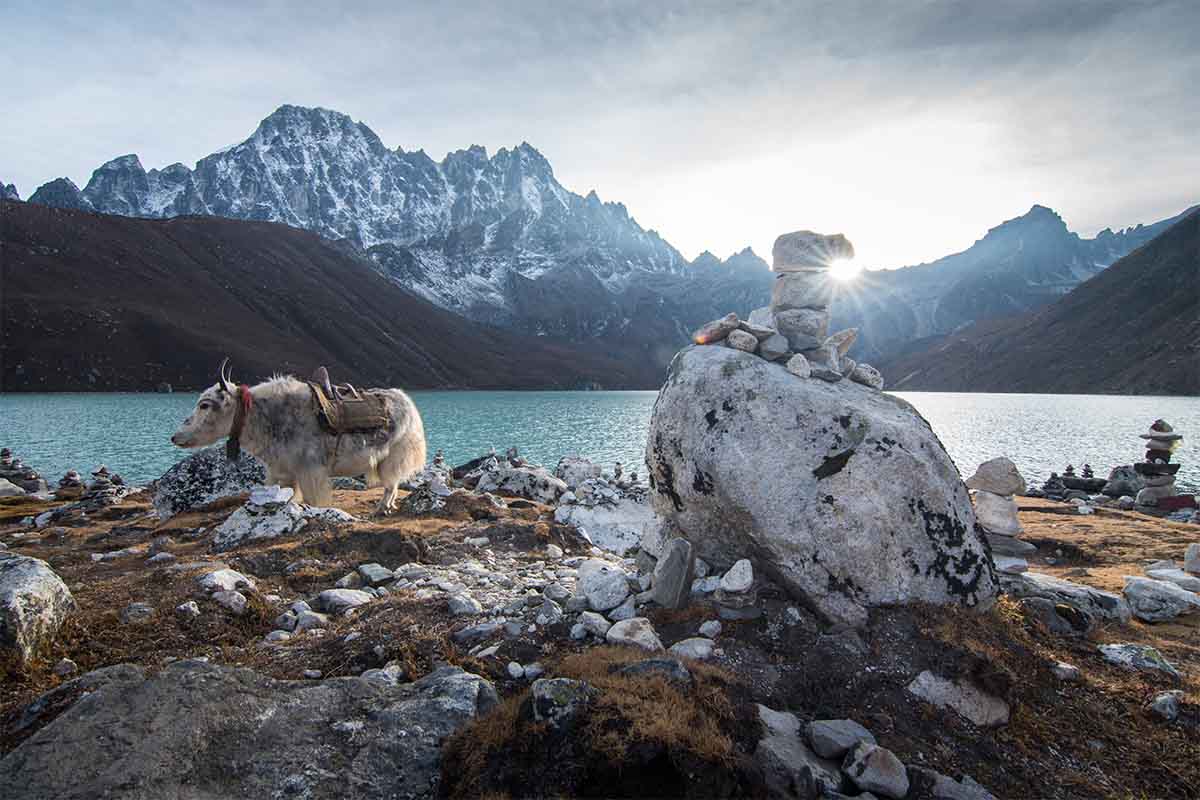
The Gokyo Lakes trek in the months of Spring rewards trekkers with a wide range of biodiversity. The regions from Phakding to Namche consist of hills covered in the laligurans (rhododendron) jungle. Primarily in March and April, these flowers erupt in the striking shades of white, red, and pink. Similarly, around Phortse, the trails flaunt the himalayan magnolia flowers and yellow Primulas. In May, once you cross 4,000 meters, the flora shifts to dwarf shrubs and herbs. Trekkers can also see tiny mountain flowers such as himalayan edelweiss, potentilla, and gentians. After cold winter temperatures, spring’s warmth increases the animal activities. Therefore, trekkers can spot the Gokyo Valley’s wildlife. Such as himalayan tahr, musk deer, pikas, marmots, red fox, etc.
The himalayan tahr, also known as the mountain goat, is the most commonly spotted animal. They are often spotted at the vertical cliffs between Dole and Machhermo. On the other hand, musk deer are shy and rarely come into sight during the day, as they are most active at dawn and dusk. They are dominantly inhabited in the laligurans and birch forests near Phortse. Snow leopards are extremely difficult to spot, but the rugged cliffs above the Ngozumpa glacier are their primary habitat.
Birdwatching Opportunities In The Gokyo Lakes Trek
Lower to mid elevations, forests are home to Rosefinches, Warblers, Bulbuls, Redstarts, and Accentors. Similarly, in the higher regions, himalayan Monal, Snowcock, Blood Pheasant, and Griffon Vultures are dominant. After winter ends, the migratory birds return to Gokyo from the lower valleys or the southern plains. Some of them are Flycatchers, Wagtails, and Pipits.
Phortse village is the best place to spot the national bird of Nepal, the Daphne, especially in March. Similarly, the Dole forest frequently hosts Fire-tailed Sunbirds, while the Gokyo Ri slopes are home to Tibetan Snowcocks. Dense juniper and rhododendron forests are perfect for sighting the Blood Pheasant. With the highest activity and the best lighting, morning is the best time for bird watching during the Gokyo Lakes trek. Similarly, carry binoculars to watch birds from a safe distance without disturbing them.
Cultural And Local Experiences on The Gokyo Lakes Trek
Trekkers are allowed to immerse themselves in the centuries-old customs and traditions of the local Sherpas. Moreover, they can be part of festivals, rituals, and celebrations. The hustling and bustling gateway to Everest, Namche Bazaar, is a trade and cultural hub. It is home to several monasteries, like Tengboche, the Sherpa Culture Center, and Namche monastery. In spring, villagers perform seasonal cleaning of these cultural sites and present offerings.
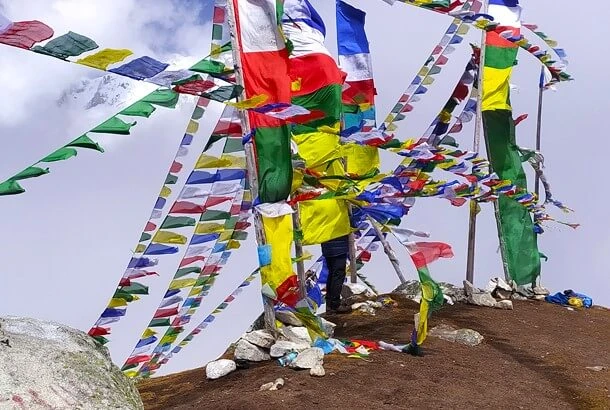
Gokyo Gompa, a small but significant Buddhist monastery in the Gokyo village, is a peaceful cultural spot where monks chant daily prayers. During spring, the Sherpas perform Kora (circumambulations) around this particular gompa. Similarly, trekkers can behold the amusing Sherpa architecture and colorful prayer flags, mani walls, and chortens. The local Sherpa community of the region views the Gokyo lakes as sacred water bodies. They see the lakes as the protective abodes of the mountain spirits and gods. Therefore, you will observe them conducting various ceremonies and prayers.
Spring festivals and celebrations
Losar, the Tibetan New Year, typically falls in March. It is celebrated in monasteries with prayers, butter lamps, and offerings. Furthermore, you can see the locals dancing and performing traditional dances. Likewise, the festival of colors, Holi, falls in either February or March. People exchange sweets and put color on each other, celebrating the victory of good over evil. The Dumji festival takes place in May or June, celebrating the birth of Guru Rinpoche. Trekkers can see the Sherpa people perform masked dances called Chham by the monks and have a feast. Another major festival of the region is the Saga Dawa, which also falls in May or June. It is marked on the fourth kunar month’s full moon, held in the remembrance of Lord Buddha’s birth, enlightenment, and death.
Altitude And Acclimatization
The highest altitude of the Gokyo Lakes trek is 5,357 meters at Gokyo Ri. Trekkers spend about 8 to 10 days above 3,500 meters, so proper acclimatization is necessary. They are not just beneficial but critical for the safe completion of the trek. Early March requires extra care and a thought-out plan for elevation gain due to lingering winter cold. April and May are warm, so your body loses fluid fast, causing dehydration. This increases the risks of altitude sickness. Therefore, stay hydrated, carry your own water bottle, and always purify it before consumption.
Similarly, get travel insurance that covers high altitude sickness and helicopter evacuation. Hire a licensed guide who can spot the early signs of altitude discomfort, such as headache, nausea, and muscle fatigue. Similarly, take an experienced porter to transport your extra luggage (around 20 kgs). This helps you stay stable on the uneven trails and reduces physical strain. Moreover, they are trained to provide urgent care in cases of altitude sickness or other illnesses. Also, they transport you to a lower elevation and arrange emergency rescue operations.
Accommodation In March, April, And May

The logistics for the Gokyo Lakes trek primarily consist of teahouses. However, luxury lodges are also available at the major points in the route. They offer premium amenities and enhanced comfort and services. Such as a private or semi-private room, hot showers, broader food options, and a lounging area. Namche has numerous luxury living choices that offer rooms with attached bathrooms and upgraded meals. As you reach Dole, the lodges are modest with mid-range facilities. You can enjoy hot meals and comfortable beds in teahouses, though private rooms are uncommon. A few lodges at Machhemro provide private rooms and hot showers, while most of the teahouses offer basic services. In Gokyo village, a few upscaled lodges are present near the lakes, like the Gokyo resort
A typical teahouse accommodation provides twin-sharing rooms. Similarly, they have shared bathrooms and toilets. Rooms are not individually heated. The only heated space is often the kitchen with a large fireplace in the middle. Taking hot showers here requires an extra charge that increases with altitude.
March
Teahouses in the high-altitude regions like Machhemro and Gokyo temporarily close in the winter due to cold temperatures and harsh weather conditions. However, they start reopening by March as spring arrives. Some of the places may have limited staff, nonetheless, they have warm cozy rooms and hearty meals.
April
By April, all the teahouses and lodges on the Gokyo Lake route are fully functioning. Accommodations in major areas like Nacmhe Bazzar are very crowded and almost always fully booked. Therefore, make early reservations, especially if you want upscale services at famous lodges and resorts.
May
All the teahouses and luxury lodges along the Gokyo route remain in operation this month. Although there is slightly less traffic than in April, most accommodations remain fully booked. So, booking early is essential to get your preferred space and services.
Food In The Gokyo Lakes Trek
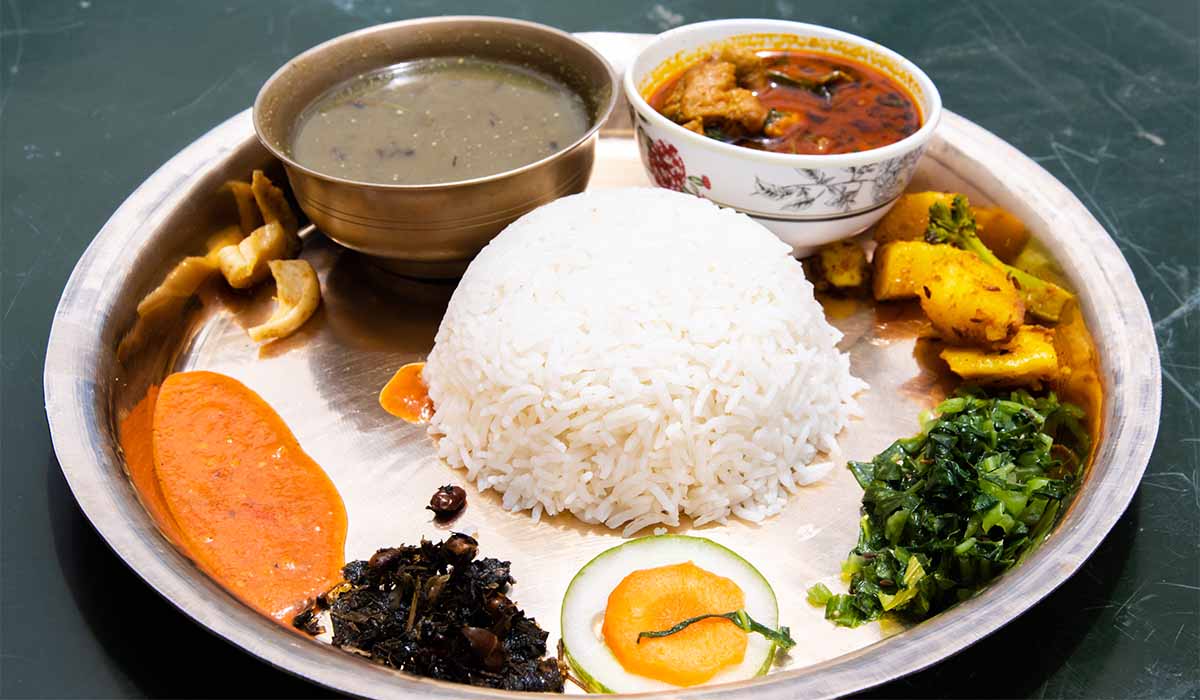
Nutritious, fresh, and warm food is the key to maintaining energy for the long hours of walking every day. In the spring, teahouses serve food made from fresh supplies. Likewise, March, April, and May welcome the highest numbers of trekkers, so teahouses offer a wide variety of dishes and bakery items. The staple Nepali dish “Dal Bhat tarkari” is most common, it includes steamed/boiled white rice, vegetables, pickle, and lentils. It makes the perfect trekking dish, as it is rich in carbohydrates and other nutrients. Most teahouses also serve food like syakpa, thenthuk, rilduk, and other potato dishes.
For breakfast, they serve omelettes, tibetan bread, tea, fruits, porridge, etc. Lunch options include thukpa, chow mein, mo:mo, etc. The dinner is mostly Dal Bhat Tarkari again. However, most of the teahouses incorporate Western meals in their menu, such as burgers, pizza, and pasta. You can ask them to prepare it for you anytime. Also, you can indulge in sweet treats (apple pie and other pastries) on the Gokyo trail.
There are high chances of meat spoiling because of Spring’s high temperature. Moreover, flies and bugs can contaminate them. So, it is better to stick to vegetarian meals and avoid eating meat. Also, as these months have hot temperatures, it is important to stay hydrated. Particularly during high-altitude treks such as the Gokyo lakes, it is crucial to reduce the risk of Acute Mountain Sickness. Always purify or filter tap water to prevent waterborne diseases.
General Queries
March, April, or May? Which is the best time for the Gokyo Lakes trek?
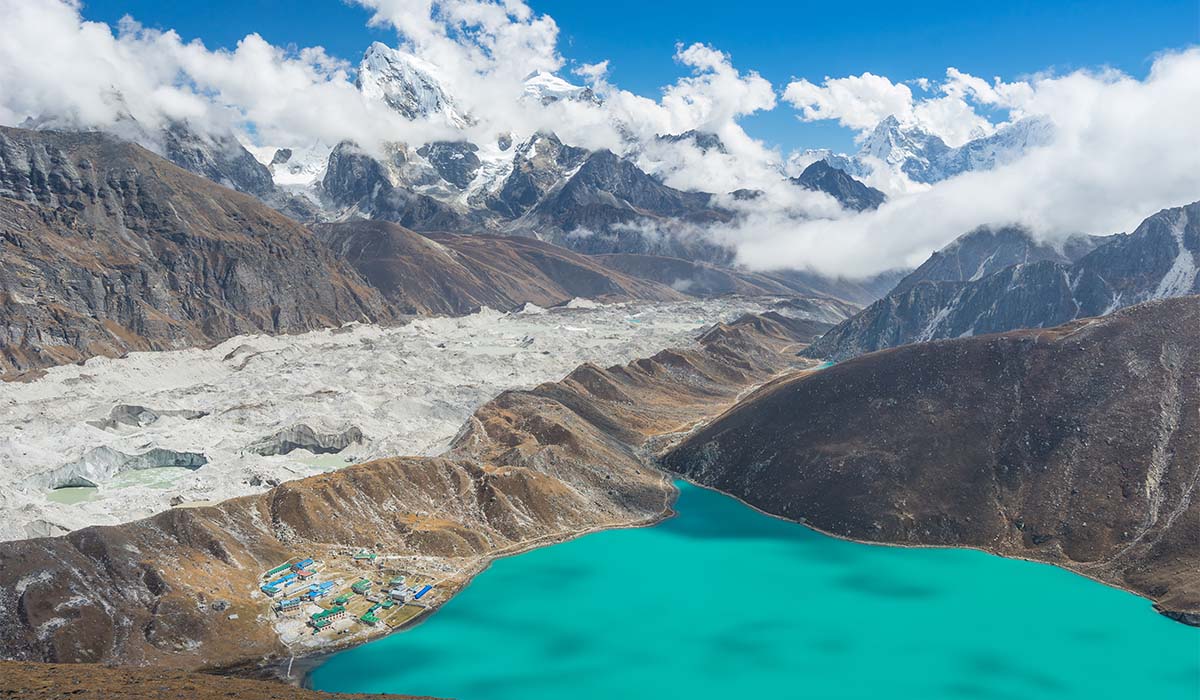
All three of them are months of peak trekking season, with stable weather, comfortable temperatures, and clear panoramic views. However, they have their own unique touch. March is best for solitude, and April is the best time for a balance of temperature, wildflowers, and partly melted lakes. Likewise, May is perfect for warm weather and completely melted lakes flaunting turquoise water.
Do I need microspikes or crampons?
They can be beneficial in March and April, walking through icy trails in higher regions, such as Machhemro.
What are the mandatory permits for the Gokyo Lakes trek?
The Sagarmatha National Park Entry Permit and the Khumbu Pasang Lhamu Rural Municipality Permit are the mandatory permits for the Gokyo trek.
Can I see the turquoise water in March?
Generally no. As most of the Gokyo lakes remain frozen around this time from the winter cold, you cannot witness their stunning turquoise color.
Which month is the best for photography?
All three months are rewarding and provide stunning sights. However, April is the most ideal for shooting farsighted views and the partly melted lake views. May offers the best opportunity to capture the turquoise water bodies and lush green vegetation. March provides crisp air and slightly snowy landscapes. Moreover, you capture the frozen beauty of Gokyo Lakes while the lakes remain frozen.
How does the weather differ in March, April, and May?
March has a touch of the winter cold in the atmosphere, with crisp, cool mornings, mild days, and cold nights. April is warmer than March and offers stunning visibility. May is the warmest month and experiences sparse pre-monsoon rainfall from time to time.
Can acclimatization be harder in any specific month?
Risk of altitude sickness remains pretty uniform in all three months, but the need for acclimatization varies slightly. Adjusting your body to higher elevation with thin air and low oxygen levels can be more difficult in March because of its colder temperatures compared to the other two months. On the other hand, acclimatization is of greater concern due to warmer weather, risking dehydration.
Is a solo Gokyo trek possible?
Legally, independent trekkers can complete the trek. Therefore, hiring a licensed trekking guide is not mandatory for the Gokyo Lakes. However, experienced trekkers highly recommend it because its trails are at high altitude and pose risks of mountain sickness.
Having them by your side ensures a safe and enjoyable journey. Furthermore, guides provide basic medical treatment for minor injuries and illnesses and arrange rescue operations.